Research Projects

Exploring artificial intelligence, functional safety, and embedded systems to develop dependable industrial technologies and support advanced engineering processes.

recAIcle: Recycling-oriented collaborative waste sorting by continual learning Completed

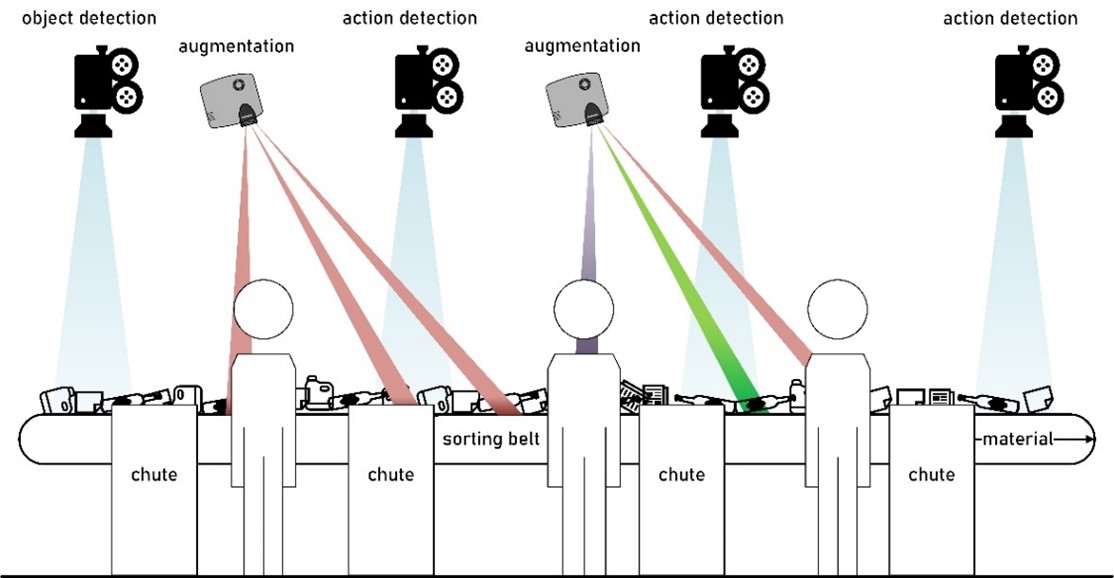
Waste contributes significantly to greenhouse gas emissions. As economic growth is the main driver for increased waste generation, a decrease in waste production while maintaining economic growth is a primary objective of the new European Circular Economy Action Plan. Recycling constitutes a key solution to this issue as it reduces the demand for primary, raw resources and mitigates the loss of value in waste management. Accordingly, the EU aims for high recycling rates and has a current target of 70% of packaging waste to be recycled by 2030 and 65% of municipal waste to be recycled by 2035.

My role: Project Manager
Read More →
TWIN-SOLUTION: Digital Twin enabled commissioning and testing of failsafe automation Completed

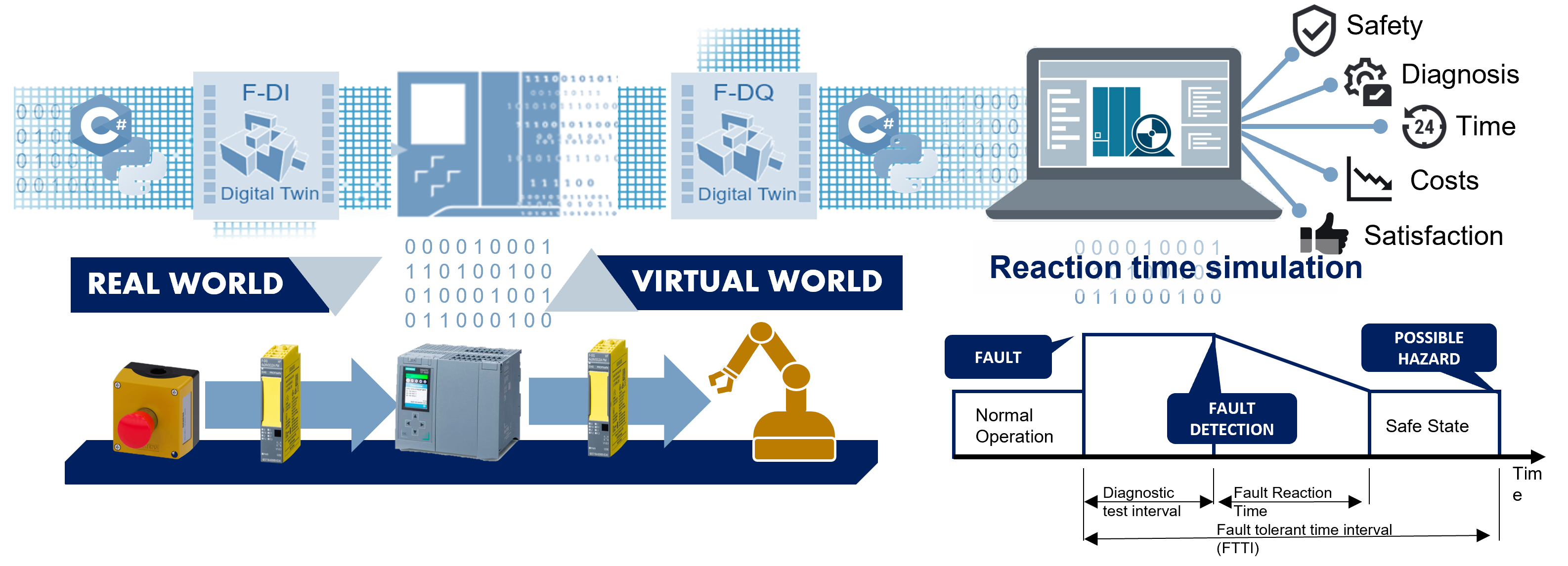
Due to the complexity of automation systems, extensive on-site engineering is required during installation, commissioning, and maintenance. Skilled engineers and technicians need to be close to the automation system to assemble and configure components, perform rigorous testing, and fine-tune control parameters, making this approach resource costly. Furthermore, working on a real physical system does not provide full flexibility, meaning that during the testing and configuration phase, the automation components can be damaged if a system is configured wrongly. This is especially a problem with safety-critical systems since testing in such systems often requires dangerous fault injection to test implemented safety functions and see if they can protect operators, machines, and the environment in the case of failure.

My role: Project Manager
Read More →
Development Processes and Tools for Cognitive Products Completed

The proliferation of industrial monitoring and control systems has led to the generation of a huge amount of data. It is predicted that 50 billion devices will be connected to the Internet by 2020, with the majority generating data in industrial settings that can be used to optimize industrial processes and to increase flexibility and integration along the product life-cycle. As the Internet of Things paradigm spreads into the industrial realm, we need to take into consideration additional aspects of industrial processes, such as their safety. The desire for better and faster production has created an industrial environment where people and cognitive machines collaborate in the same physical space. Consequently, the safety of people and of equipment has emerged as one of the greatest concerns for engineers in human-robot collaborative work settings. Manufacturers of Programmable Logic Controllers (PLCs) have invested a lot of resources in upgrading their PLCs, so that they are capable of detecting anomalies and of ensuring safety for the system and workers in the case of failures. Complex systems with multiple control units still represent a significant challenge, since the optimal safe state of the entire system needs to be determined and reached in time and space.

My role: Researcher
Read More →